

Table of Contents
- What Fast Closing Timelines Really Look Like in North Jersey
- Mortgage Closing Process Steps From Offer to Keys
- Average Time to Close on a House in NJ (and Why It Varies)
- Mortgage Document Checklist for Buyers Who Want to Move Fast
- How to Speed Up Mortgage Underwriting Without Cutting Corners
- Comparing Fast Closing Timelines: Digital Lenders vs. Local Advisors
- The Trade-Off Between Speed and Accuracy in Fast Closings
- Frequently Asked Questions
Last Updated: September 30, 2026
What Fast Closing Timelines Really Look Like in North Jersey
Fast closing timelines in North Jersey usually land between 21 and 30 days for a well-prepared buyer. That’s the working range. Not the marketing range.
Lender Luke Powered By The Mortgage Exchange works with buyers across Bergen, Hudson, Essex, Union, and Middlesex Counties, and the pattern is consistent: the deals that close quickly are the ones where the paperwork was ready before the offer went in.
The single biggest predictor of a fast closing is how complete your document file is at application. Not your credit score. Not your lender’s app.
Mortgage Closing Process Steps From Offer to Keys
The mortgage closing process steps run in a fixed order, and knowing them lets you spot a stall before it costs you the house.
- Offer accepted and purchase contract signed
- Loan application submitted with full documentation
- Title search ordered on the property
- Appraisal scheduled and completed
- Underwriting reviews and clears conditions
- Closing Disclosure issued and reviewed
- Final walkthrough and signing
- Funding and recording
The Role of Title Search and Due Diligence in Bergen and Hudson County
Title search and due diligence is the quiet step that sinks the most deals. Older housing stock means older records, and older records mean surprises.
Appraisal, Underwriting, and the Closing Disclosure Window
Appraisal scheduling is usually the longest outside delay, and it’s the one you control least. Underwriting then runs in parallel where possible.
Average Time to Close on a House in NJ (and Why It Varies)
The average time to close on a house in NJ typically falls between 30 and 45 days, though the spread is wide. County, property type, and buyer readiness all move the number. A well-prepared buyer working with a responsive lender can land in the 21-to-30-day range; a condo with an HOA questionnaire backlog or a file with a late-appearing bank statement can push past 45.
Here’s what actually drives the variance:
- Property type: condos and co-ops add review layers, including HOA questionnaires, master insurance certificates, and in some cases condo association litigation searches
- Title complexity: older or disputed records slow searches, and older housing stock in dense North Jersey towns produces more of them
- Appraisal turnaround: rural and unique properties take longer, and so do properties with limited recent comparable sales
- Buyer documentation: incomplete files stall underwriting, and the stall is usually measured in days, not hours
- Lender workflow: some shops batch files and review in cycles, some move files same-day
County-Level Patterns Across Bergen, Hudson, Essex, Union, and Middlesex
The county matters more than most buyers expect. The same buyer, same lender, same loan product can see a two-week swing depending on where the property sits.
- Bergen County: Dense, century-old property lines in towns like Hackensack, Teaneck, and Ridgewood mean title searches surface more easements, old survey disputes, and unrecorded agreements. A clean Bergen file moves fast; a messy one does not.
- Hudson County: Condo and co-op layers dominate in Jersey City, Hoboken, and Weehawken. Each layer needs separate review, and HOA questionnaire turnaround is often the single longest outside delay in the file.
- Essex County: A mix of older urban housing stock and suburban single-family homes. Title work in older sections of Newark, East Orange, and Irvington can surface heirship issues or unreleased prior mortgages that require curative work.
- Union County: Suburban single-family purchases in towns like Westfield, Cranford, and Scotch Plains tend to move on the faster end when the file is clean. Older sections of Elizabeth and Plainfield can add title complexity.
- Middlesex County: A wide spread. Newer construction and planned subdivisions in towns like Edison, Woodbridge, and Monroe move quickly. Older boroughs with mixed-use and multi-family stock add review layers.
Why the Same Buyer Gets Different Timelines in Different Files
A clean single-family purchase in a well-documented subdivision moves faster than a condo with an HOA questionnaire backlog. Same buyer, same lender, different timeline.
Ask your lender for a county-specific target date, not a generic one. A 25-day target in a clean Bergen single-family file is realistic. The same target on a Hudson condo with an HOA questionnaire backlog is not.
Mortgage Document Checklist for Buyers Who Want to Move Fast
The mortgage document checklist for buyers is short, but every item matters. Missing one item can add days.
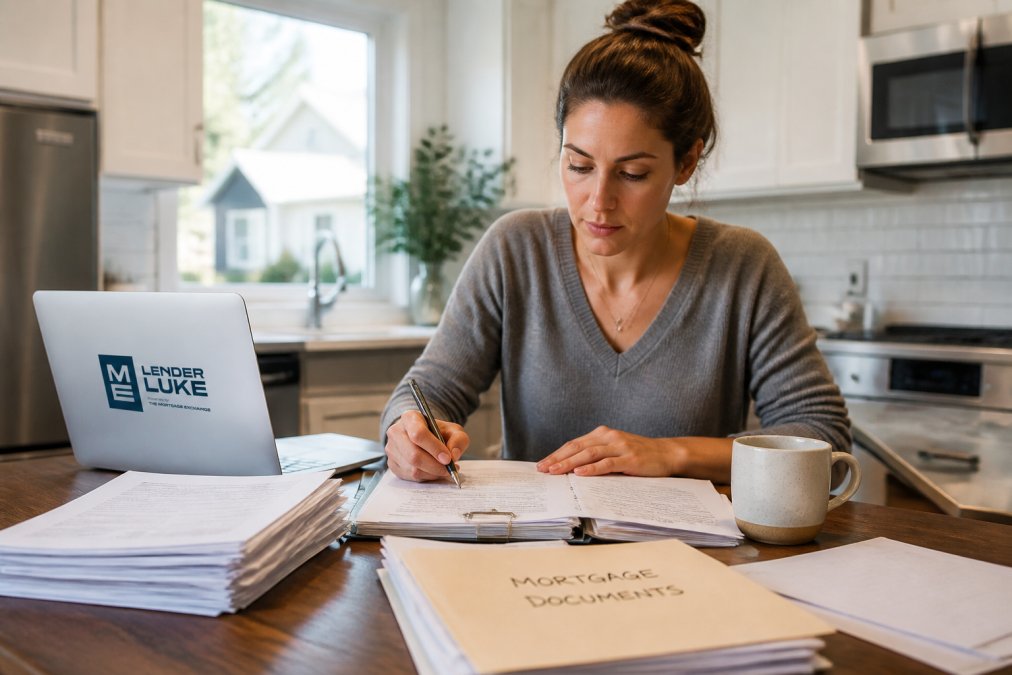
Gather these before you apply:
Schedule A Free Mortgage Consultation →
- Last two pay stubs
- Last two years of W-2s
- Last two years of tax returns
- Last two months of bank statements, all pages
- Photo ID
- Proof of down payment source
- Gift letter, if funds are gifted
- Self-employment profit and loss, if applicable
- Divorce decree or child support order, if applicable
- HOA contact info, for condos
Bank statements must include every page, even blank ones. Lenders need the full statement to verify there are no undisclosed accounts or large deposits.
How to Speed Up Mortgage Underwriting Without Cutting Corners
Speeding up mortgage underwriting comes down to three things: complete documents, fast responses, and a loan officer who answers the phone.
Here’s how to keep the file moving:
- Respond to condition requests same day. Every day you wait adds a day to closing.
- Don’t open new credit during the process. It can trigger a re-pull.
- Don’t move money between accounts without telling your lender.
- Send documents as PDFs, not photos. Photos get rejected and re-requested.
- Ask for a direct contact, not a call center queue.
Comparing Fast Closing Timelines: Digital Lenders vs. Local Advisors
Fast closing timelines vary more by process than by brand. Digital platforms automate document handling. Local advisors compress decisions.
| Approach | Typical Strength | Typical Weakness | Best For |
|---|---|---|---|
| Digital-first platform | Fast document upload and tracking | Standard closing windows, scripted support | Tech-comfortable buyers |
| National bank | Institutional reliability | Longer average timelines | Existing bank customers |
| Local advisor | Direct contact, custom structuring | Requires responsive borrower | Complex income, first-time buyers |
Ultra-fast closings carry real risk. Rushing a title search or skipping a full appraisal review can surface defects after funding. Speed is only valuable when accuracy holds.
The Trade-Off Between Speed and Accuracy in Fast Closings
Speed and accuracy pull against each other, and the honest answer is that you can’t max both. You can, however, avoid the false choice, and you can understand exactly what you’re risking when you push for the fastest possible date.
The Real Risks of Rushing Due Diligence
Here’s what actually goes wrong when a file is pushed too fast:
- Title defects discovered after closing. An unreleased prior mortgage, an heirship issue, or an unrecorded easement that a rushed search missed becomes your problem once you hold title. Curative work after closing is slower, more expensive, and sometimes requires a quiet title action.
- Appraisal value disputes. Skipping a full appraisal review to save days can mean the value doesn’t hold up on a later refinance or resale. A rushed review is not the same as a completed review.
- Undisclosed physical defects. Compressing the inspection window, or waiving it entirely to win a bid, shifts repair costs to the buyer. In older North Jersey housing stock, this is where the biggest post-closing surprises live.
- Fraud exposure. Cutting identity and document verification steps to save hours increases the risk of wire fraud, straw-buyer schemes, and income misrepresentation. Fraud prevention tools have gotten better, biometric ID verification and eSignature platforms now let lenders verify identity and intent without slowing the file, as outlined by Fannie Mae’s fraud prevention guidance, but they only work if they’re actually used.
- Loan-level defects. A file that closes with unresolved underwriting conditions can be flagged on post-closing audit, which can trigger a buyback demand from the investor and, in some cases, a repurchase obligation for the lender. That risk gets priced back into future loans.
What a Safe Fast Closing Actually Looks Like
A safe fast closing is not a rushed one. It’s a compressed one, and the compression comes from preparation, not from skipping steps.
- Title search ordered the day the contract is signed, not the day after inspection. This is the single highest-leverage move a buyer can make.
- Full appraisal review completed, even if the appraisal itself came back quickly.
- All underwriting conditions cleared before the Closing Disclosure is issued, not after.
- Inspection completed within the contractual window, with any renegotiation handled before the loan moves to final underwriting.
- Wire instructions verified by phone with the title company using a known number, never a number from an email.
Frequently Asked Questions
What is the typical timeline for closing on a house in New Jersey?
Most New Jersey home purchases close in 30 to 45 days, though timelines vary by county and lender. A well-prepared borrower with a pre-underwritten approval can close in as few as 21 days. In Bergen, Hudson, Essex, Union, and Middlesex counties, title search and appraisal scheduling often add a week or more. Working with a local lender who knows the market can shave days off the process.
What documents should I prepare to speed up my closing?
Gather your two most recent pay stubs, W-2s or tax returns for the past two years, bank statements for the last two months, a government-issued ID, and proof of any gift funds. If you are self-employed, include profit-and-loss statements and business tax returns. Having these ready before you apply lets your lender verify income and assets faster, which directly shortens underwriting time.
How does a clean title search impact closing speed in Bergen or Hudson County?
A clean title search means no undiscovered liens, judgments, or ownership disputes. In Bergen and Hudson County, older properties and dense urban areas can have complex title histories. When the title is clear, the title company can issue a commitment quickly, and settlement can be scheduled without delays. Ordering the title search early and working with an experienced attorney helps avoid last-minute surprises.
What are the common bottlenecks that delay home closings?
The most common delays are appraisal scheduling, missing or incomplete borrower documents, title issues, and underwriting requests for additional information. In fast-moving markets, appraisers may be booked out a week or more. Submitting a complete document package upfront and responding to lender requests within 24 hours can prevent most bottlenecks. Choosing a lender with in-house processing also reduces handoff delays.

